Three years into the Israel’s genocidal war on Gaza, Diana Buttu reflects on why growing public criticism hasn’t changed the reality on the ground.
Macklemore
Zach Bryan
Angelina Jolie
Even Megyn Kelly
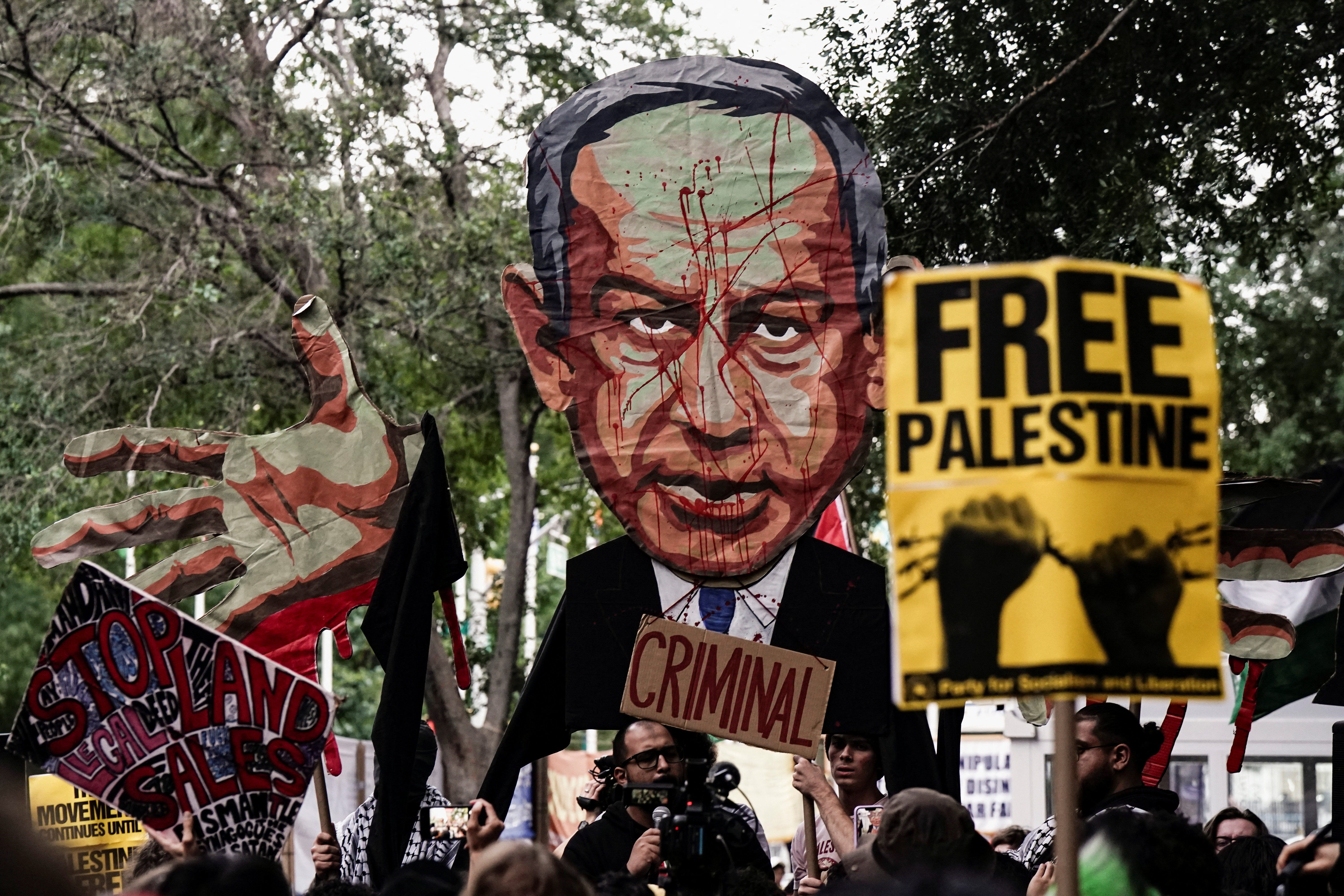
Today, Palestine can be seen and heard everywhere. For the first time, supporting Israel is costly and staying “neutral” is not an option – just ask Ed Sheeran, whose ticket sales have plummeted for his mealy-mouthed bothsidesism and “it’s complicated” stance. Palestine marches continue to attract thousands, and even in the United States, public opinion polls are showing that Israel is not liked – so much so that Megyn Kelly, a woman who, just a year ago, said that we Palestinians were “fine” having our children starve just so that we “can put them on camera,” has begun to change her tune.
It’s not that I couldn’t have imagined criticizing Israel publicly – or at the very least calling for a “free Palestine” – in the West would no longer be taboo; I just never thought it would take so long and come at such an enormous cost to Palestinians. In just three years, over 200,000 Palestinians have been killed or injured, or are missing; children are being starved, and their limbs blown off; Israeli bombings have not stopped; and Israel continues to use Palestinian bodies to test out the latest AI mass-killing invention.
And while global public opinion has shifted, we still have not seen this translate into a shift in policy. Bombs are still being sent to Israel; trade is still flowing with Israel (despite proclamations that they will stop), and Benjamin Netanyahu (and his entire cabinet of war crimes supporters) is still roaming freely, despite an International Criminal Court arrest warrant.
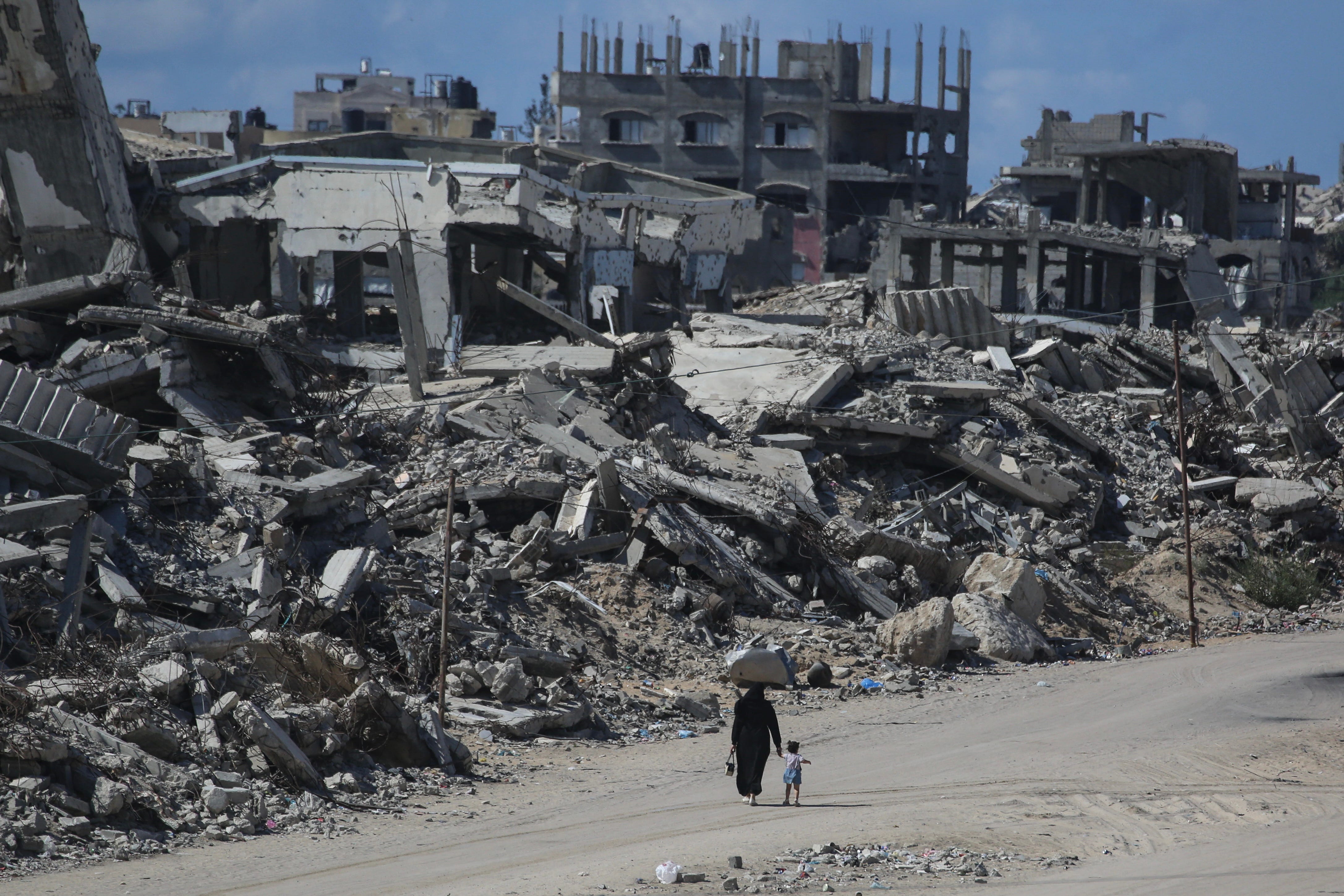
Israel continues to speak very openly about ethnic cleansing, not just in Gaza but in the West Bank and in Lebanon, and the Israeli public continues to deny (or not care) that it has carried out genocide. In Gaza, Israel steals more and more land, kills more Palestinians, and has, one year into a so-called ceasefire, not allowed any reconstruction material to enter the Strip because it has made clear that it aims to ethnically cleanse. It’s no longer a secret – and the global public is catching on, but why haven’t the decision-makers? Why haven’t the bomb shipments stopped?
That’s easy – because the genocide that Israel is perpetrating in Gaza is not just about Israeli policies over the last three years; it’s about Israel as a whole – about how the state was created by the very countries that now support its genocide, and about how it operates and what the future looks like. Israel’s genocide in Gaza has laid bare what Israel is about: the ethnic cleansing of Palestine, which can only be achieved through more war crimes and genocide.
The Ethnic Cleansing Started in 1948
Palestinians have always been told that we need to “get over” the Nakba, the ethnic cleansing of our homeland. Indeed, for so many diplomats, journalists, and others, we were supposed to focus only on the West Bank and the Gaza Strip and ignore what Israel did in 1948. But the only way one can understand what Israel is doing today (and of course what it did before October 2023) is by understanding the Nakba. Israel was created in 1948 through the exact same means (minus the technology) that it is using now: ethnic cleansing, mass killings, terror campaigns, and the wholesale destruction of communities, for much of which we still do not even have a complete grasp of the details. The aim then was, as it remains now, to remove us Palestinians from our homeland – to erase us. This is why Israel systematically destroyed hundreds of Palestinian towns in 1948, just as it has completely destroyed Gaza. And it continues to do the same in the West Bank and now Lebanon as well. This is why you see daily settler pogroms in the West Bank, Israeli leaders speaking of “cleansing” Lebanon, and settlers chomping at the bit, waiting to build settlements on that “cleansed” land.
The war crimes that Israel has committed are no secret. Israel brags about them often. Back in the early 2000s, when I was involved in the Israeli-Palestinian negotiations, Israeli negotiators often regaled others with their war crimes tales. “The Palestinians are lucky we are letting water into Gaza. We could easily just bomb the water infrastructure,” one Israeli said. “The Palestinians are lucky we are only killing (assassinating) one or two; otherwise we would have to kill many,” another said. “The Palestinians are lucky we are just blowing up individual houses. We could destroy entire neighborhoods.” We were always reminded how “lucky” we were.
Diplomats would exchange looks of shock at one another and then dutifully go back to nodding their heads. To us, they would say: “They don’t really mean it. It’s just for domestic consumption to appease the right wing.”
But we see today that they really do mean what they say. Israel isbombing water infrastructure, killing many, and blowing up entire neighborhoods.
By now there should be no doubt that the same Israeli logic that justified the ethnic cleansing and wholesale destruction of Palestine then continues to be invoked to justify genocide in Gaza now. Israel’s actions in Gaza are simply an extension of the Nakba. And unlike Israel’s supporters, who are unwilling to acknowledge this, Israelis are.
From Nakba to Genocide Apologists
To be Palestinian living in Palestine is to live among the people who either perpetrated the Nakba, were apologists for the Nakba, or deny the Nakba. It is to live among the people who perpetrated genocide, are apologists for genocide, or genocide deniers. The vast majority of Israelis fall into these categories. This is not an exaggeration. Public opinion polls show that Israelis would love to expel Palestinians. It is discussed on the nightly news; it is discussed on social media. It is everywhere. Almost daily, I come across some video or post decrying the presence of so many Palestinian medical staff in Israeli hospitals. How dare they be there? Even the Israel-loving, self-hating Arab who was once a darling in Israel, Yousef Haddad, has now become unpopular because a 5-year-old video of him supporting the two-state solution has resurfaced. Never trust an Arab. See – they always want land. But it isn’t just the right wing.
Take, for example, a recent (now viral) video, in which popular Israeli satirist Lior Schleien is seen speaking to Israeli young people around army age. In the video, he asks them how they feel about Palestinians. The by-now typical genocidal tropes are repeated by several: “there are no innocents” in Gaza, including babies because they will one day grow up. Lior problematically agrees there is no genocide in Gaza and repeats the well-worn trope that Palestinian textbooks are a problem. He then pushes the student to think about what should be next. But rather than this first student questioning where this is all going, another student interjects, “But do you think we should [commit genocide]?” This second student is serious. Clearly, no one has told her this isn’t a question asked in any normal society. But then again, Israel, it seems, is not normal. Her question baldly reflects decades of Israeli policies that have dehumanized Palestinians and the superiority and the terrifying zero-sum mentality of ‘we must kill them first.’
According to some estimates, Israel has carried out more assassinations than any other country in the world, and the killing machine has become so normalized that young people, on video, are asking whether they should commit genocide. (Hint: the answer is no). For them, they want a Palestinian-free Palestine. A land empty of its Indigenous people so they can create new fantasy skyscrapers and pretend we did not exist.
But while Israelis are open about their fantasies of no Palestinians from the river to the sea, Israel’s supporters still cling to the fantasy of the “two-state solution.” Indeed, it was meant to distract from the Nakba to have us focus on “solutions” instead of the “past.” “The problem has a solution,” was the thinking, and therefore nothing needed to happen.
Israelis have made it clear that there is only one solution – one in which we do not exist – and despite the empty wishful statements of support for a “two-state solution” or the recognition of the “State of Palestine,” as it is being erased, cannot mask the reality that Israel isn’t going to magically end its ethnic cleansing process, the ethos of the state, on its own.
And so countries, particularly the United States, aren’t yet willing to confront Israel – even as global public opinion encourages them to – because they created it, whether through diplomatic support, financial support, military support, or inaction. The “this isn’t the Israel I know” is exactly the only Israel that Palestinians have ever known.
So, instead, these countries prefer to hide behind the need for “judicial determinations” of genocide; they pray for a change in government in Israel (though a change will not change genocide) and hope that Israeli society will de-Zionize itself (or perhaps won’t be so open about its genocidal intentions). In short, they want to stay “neutral” when staying neutral is not an option. Just ask Ed Sheeran.
Diana Buttu is a Haifa-based lawyer and analyst who was a legal adviser to the Palestinian negotiating team in the early 2000s and is a frequent commentator and writer on Palestinian and Israeli issues. She is also a practitioner in residence at Georgetown University in Qatar. She writes Zeteo’s ‘A Diary from a Palestinian in Israel.’
The views expressed in this article are the author’s own and do not necessarily reflect those of Zeteo.
Note from our Editor-in-Chief: This interview essay is part of our special week-long coverage marking three years since the horrific Hamas Oct. 7 attack on Israel and the U.S.-funded Israeli genocide in Gaza that followed. If you’re not already a paid subscriber, become one today to get full access to all of Zeteo’s Oct. 7 coverage and more. – Mehdi